
Samsung Galaxy Fold6 review
The most productive foldable | 5 months of use
Well, 2025 has begun and we’ll be hearing news from Samsung shortly. But there’s unfinished business from last year — I never wrote a review of the Galaxy Fold6. I’ve been using this model since August, so I can’t wait to share my experience and go through its most interesting features. Enjoy!
Design
Finally, some changes. The last three generations of Fold looked practically identical, with minimal improvements. The Galaxy Fold6 has a more angular body and a slightly wider cover display. The outer screen is a little larger at 6.3 inches, while the main one stays the same at 7.6 inches.
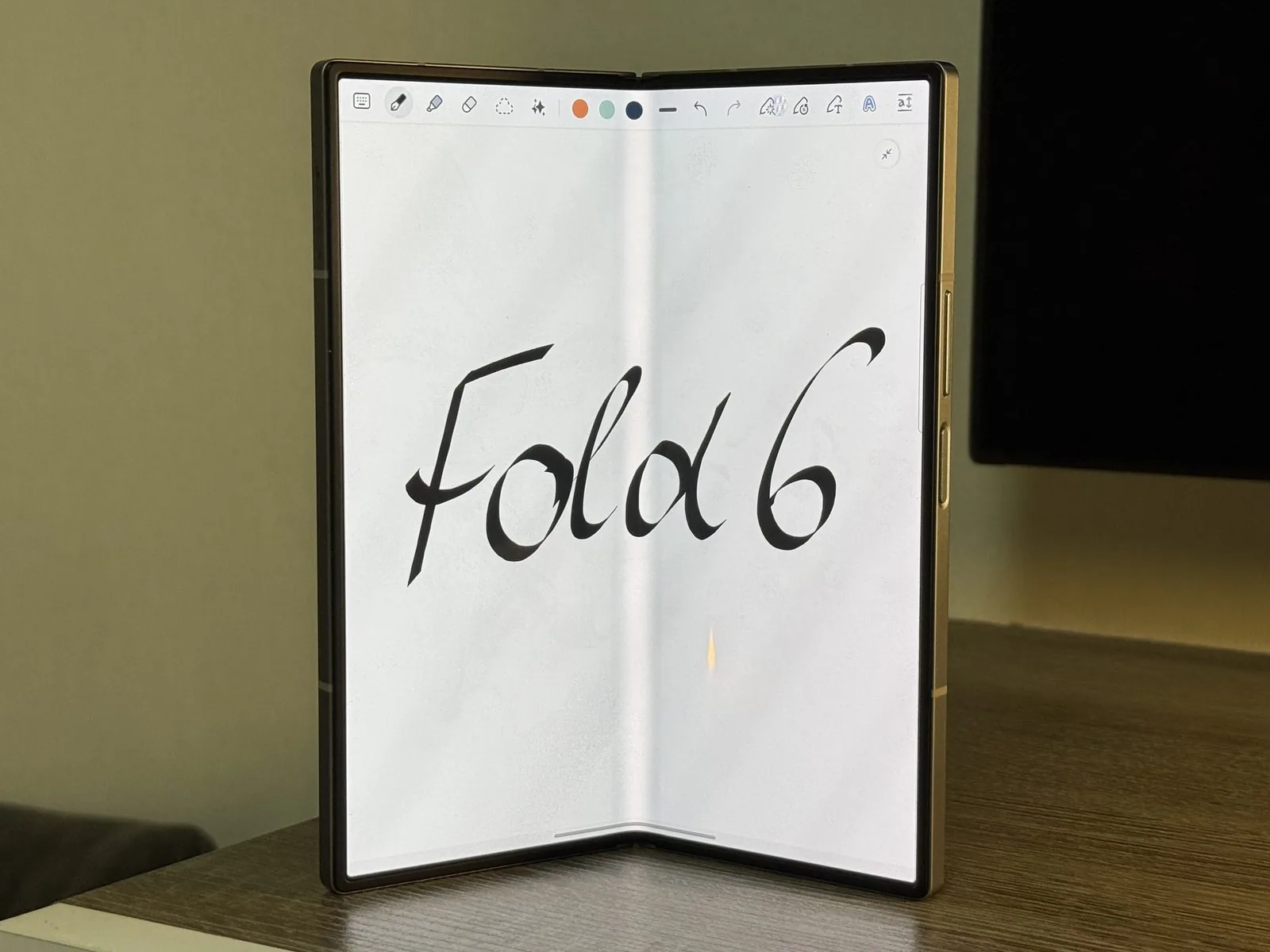 The Fold6 has become lighter — 14 grams less, now 239 grams, just 7 grams more than the Galaxy S24 Ultra. The phone has also become 1.3 mm thinner folded and 0.5 mm thinner unfolded. There was plenty of discussion online about the Fold6's design, because in October the Galaxy Fold Special Edition launched in South Korea — larger and considerably thinner. That model is only available in South Korea, though. At least we've seen what Samsung can achieve, and perhaps the Galaxy Fold7 will bring those innovations. In Lithuania the Fold6 is sold in three colours: silver, navy and black.
Durability
Durability is a very important quality in a folding phone. The Fold6’s exterior is covered in Gorilla Glass Victus 2, and the body and hinge are made from reinforced Armor aluminium. The Fold6 is also officially water and dust resistant, carrying an IP48 rating. That means the device is protected against particles larger than 1 mm and can be submerged in clean water up to 1.5 m deep for 30 minutes.
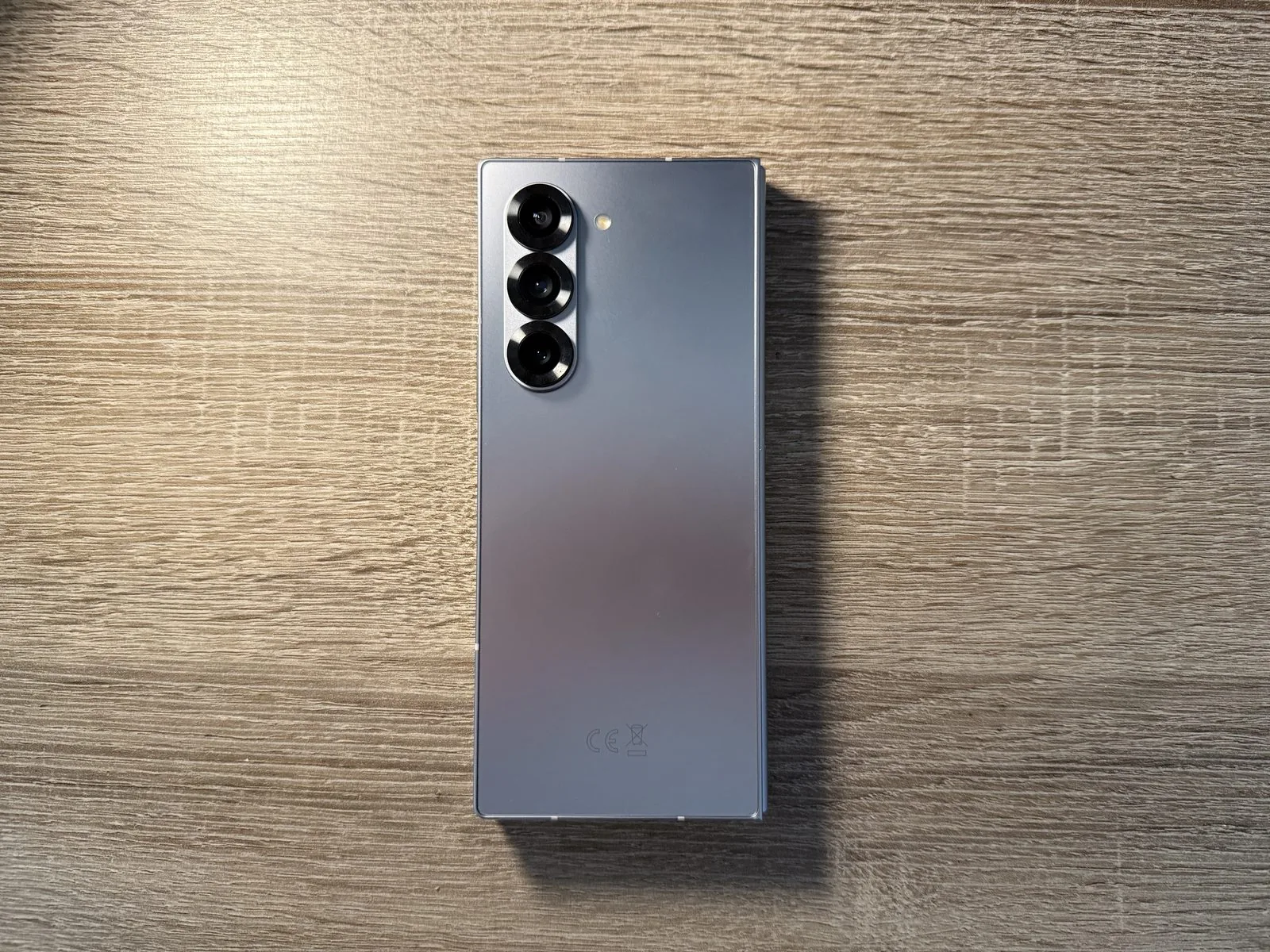 I have no major complaints about the Fold6's hinge, though after a month of use a strange creaking sound occasionally appears. My colleagues have had more problems with the Flip6 hinge, which loosened after just a few months and can damage the display. So a 200,000-fold rating doesn't guarantee especially high reliability.
Displays
The Fold6’s headline feature remains its large, folding 7.6-inch display. I have no complaints about Samsung’s display technology: Dynamic AMOLED 2X, 120 Hz refresh rate, 2,600 nits peak brightness. The screen size is perfect for editing documents, browsing, taking notes and gaming. It’s comfortable in sunlight and in the dark alike, since brightness can drop to 1 nit.
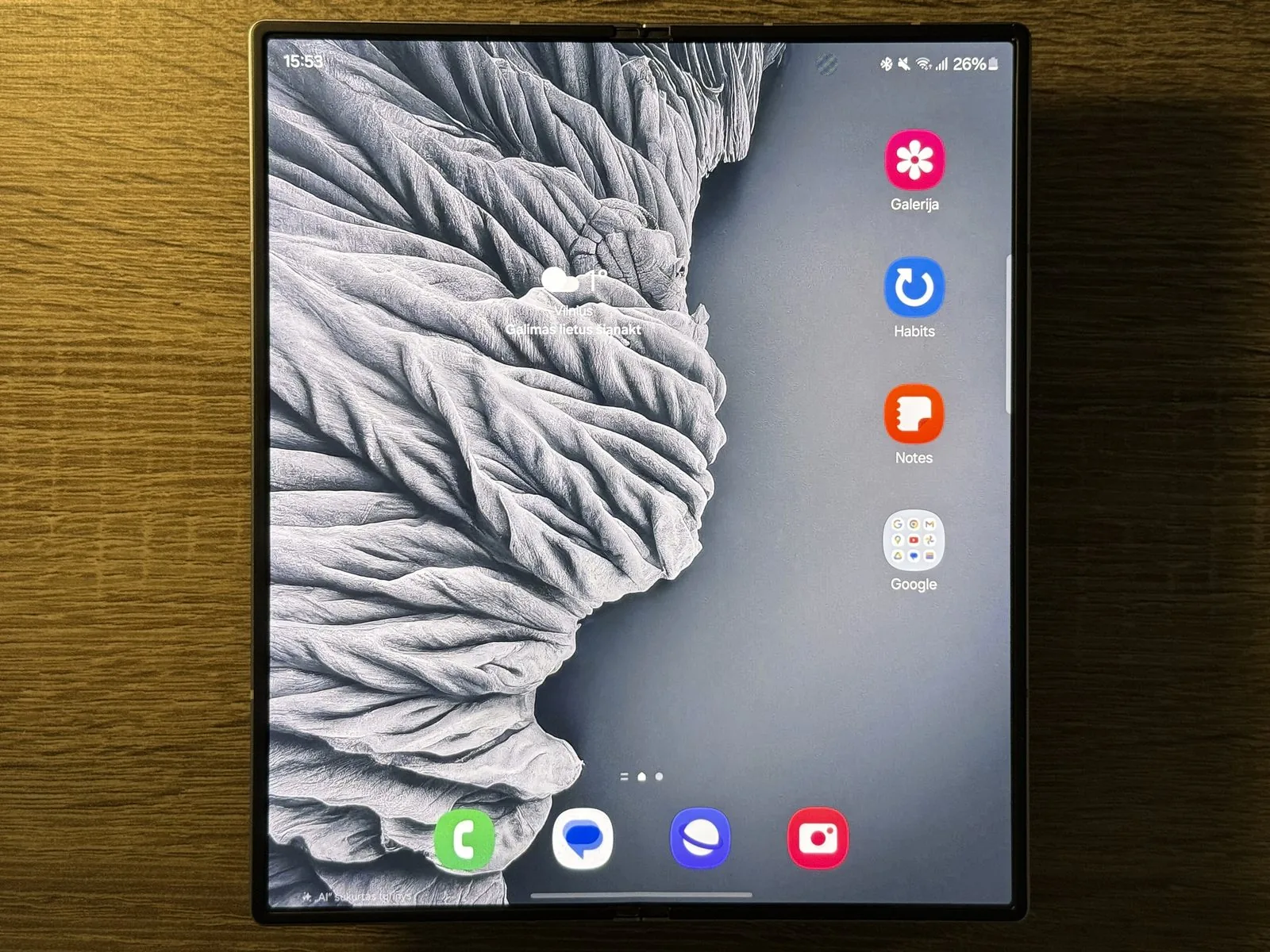 During testing I noticed the inner display's peak brightness drops after a while and the screen itself heats up. The software protects the device from overheating. The crease has become slightly smaller but is still noticeable to the touch and visible against the light. Over time it deepens a little, though you'd only spot that comparing against a new phone.
The cover display has grown 0.1 inches this year, and you feel the difference. It’s slightly wider and shorter, which makes the keyboard easier to use and one-handed operation more comfortable. Still, I’d like the aspect ratio to be closer to a classic 20:9 phone — perhaps one day. The Fold6 also has noticeably thinner bezels on both screens, though they remain slightly thicker than on Samsung’s regular flagships.
Another Fold6 advantage: when using the folding display and holding the phone with both hands, the speakers aren’t covered. So you can enjoy full volume and excellent quality while gaming or watching films.
Advertisement
Cameras
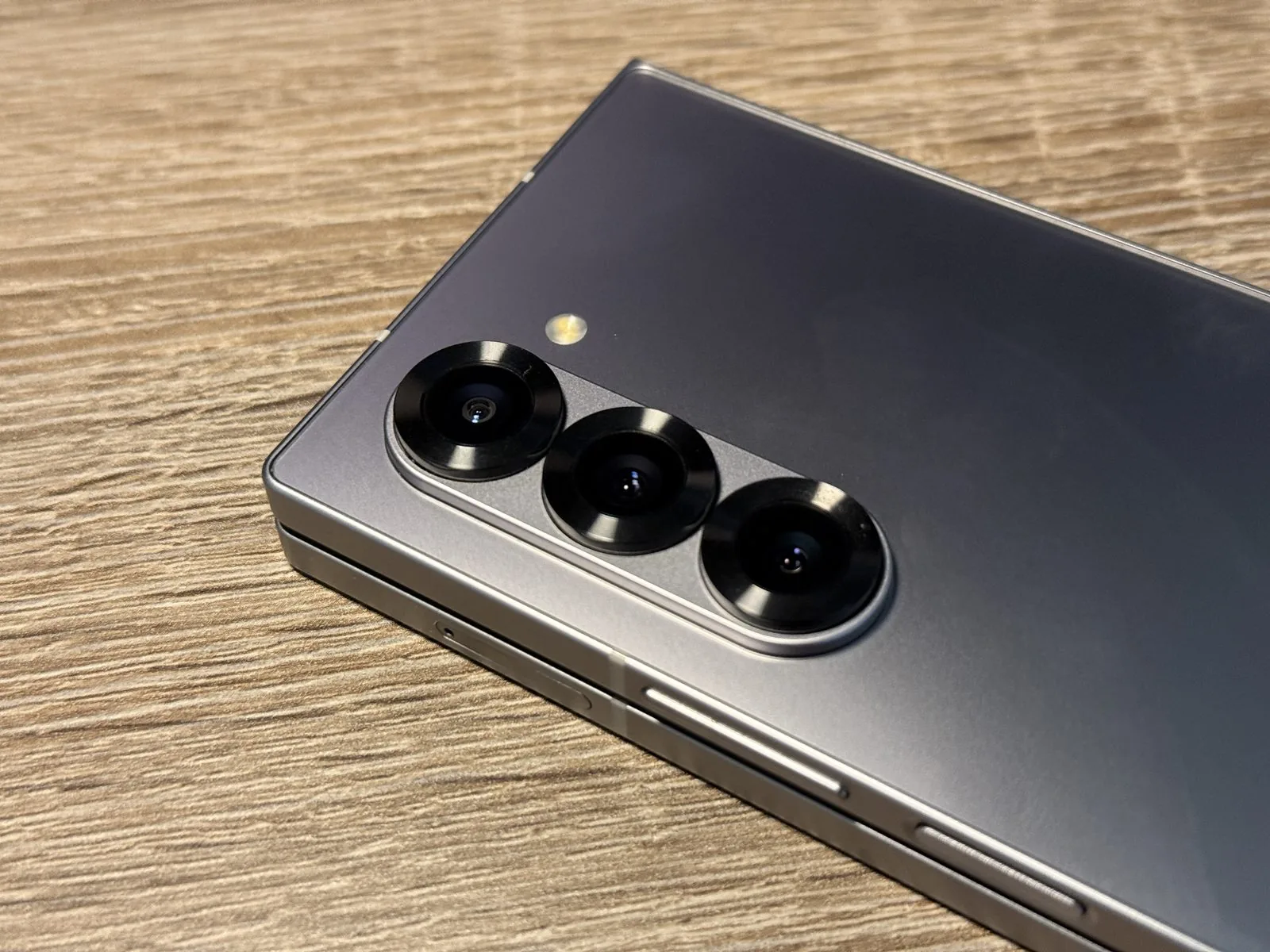 Unfortunately, apart from a new camera island design, we saw no changes. All the sensors are the same as in the Galaxy Fold4 — at least two years old. Camera quality was genuinely disappointing, especially given that the device launched at over €2,000.
On the Fold6’s back you’ll find a 50 MP main camera, a 12 MP ultra-wide and a 10 MP 3x telephoto. The main camera captures genuinely good shots — quality is slightly below the S24 Ultra, but of all the cameras on the phone this one takes the best photos. The same sensor appears in the S24 and Flip6. Photos are sharp and contrasty, and I noticed no major shortcomings.
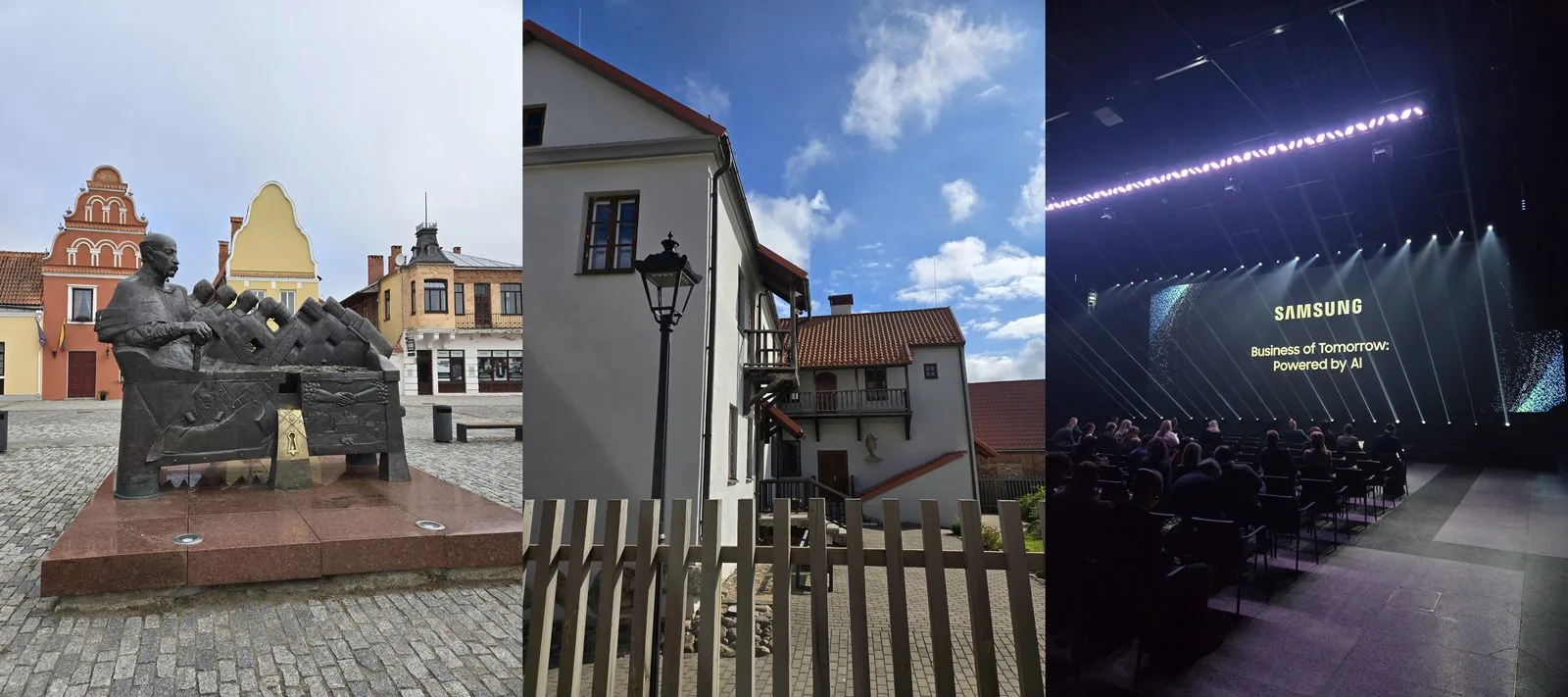
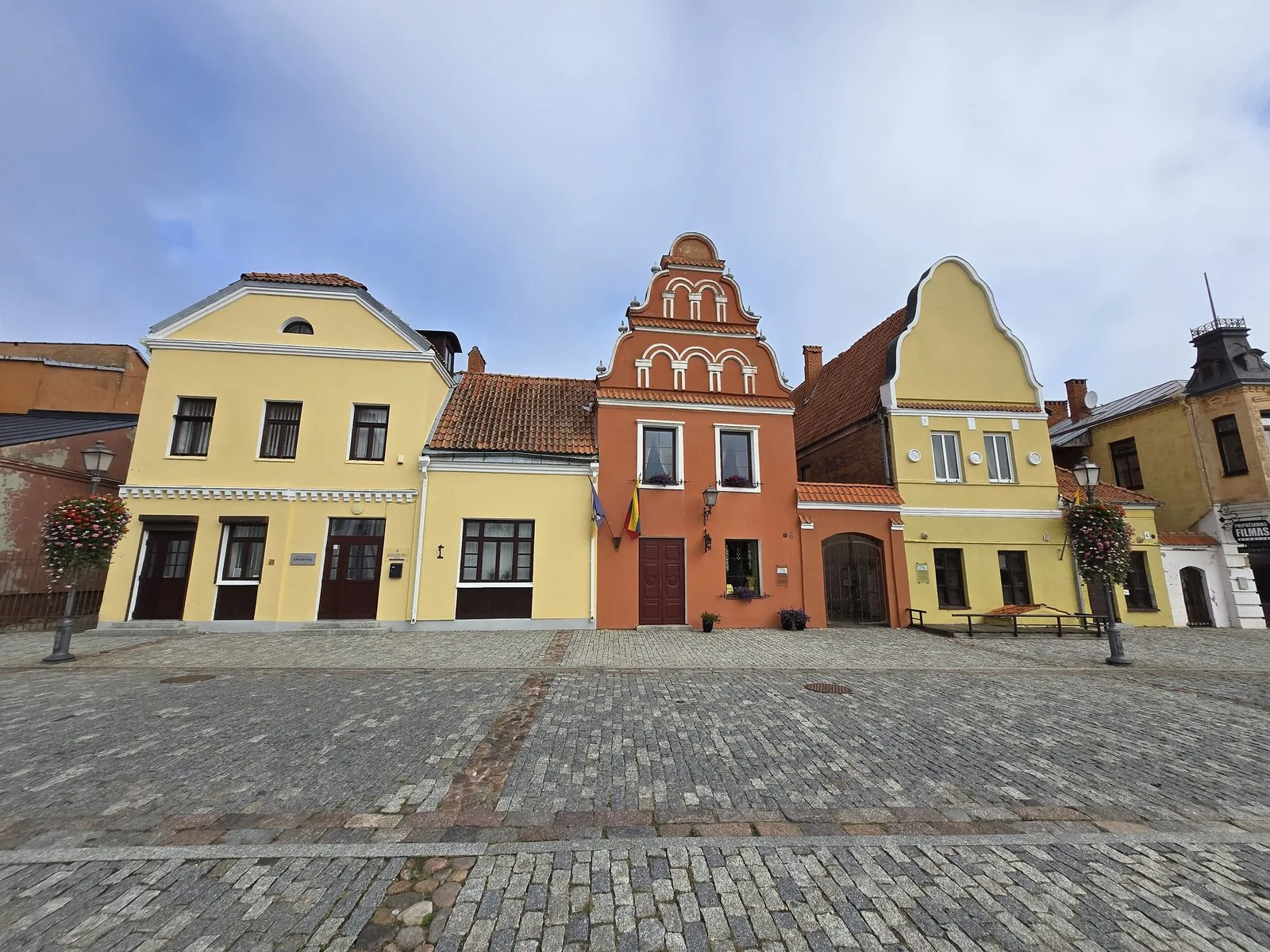
The ultra-wide camera needs a bigger update — its resolution is low, and adding autofocus would help capture impressive macro shots. The 3x telephoto is already dated, and the 30x digital zoom is only good for photographing paintings at an exhibition. I’d very much like the next generation to have Ultra-series camera quality.
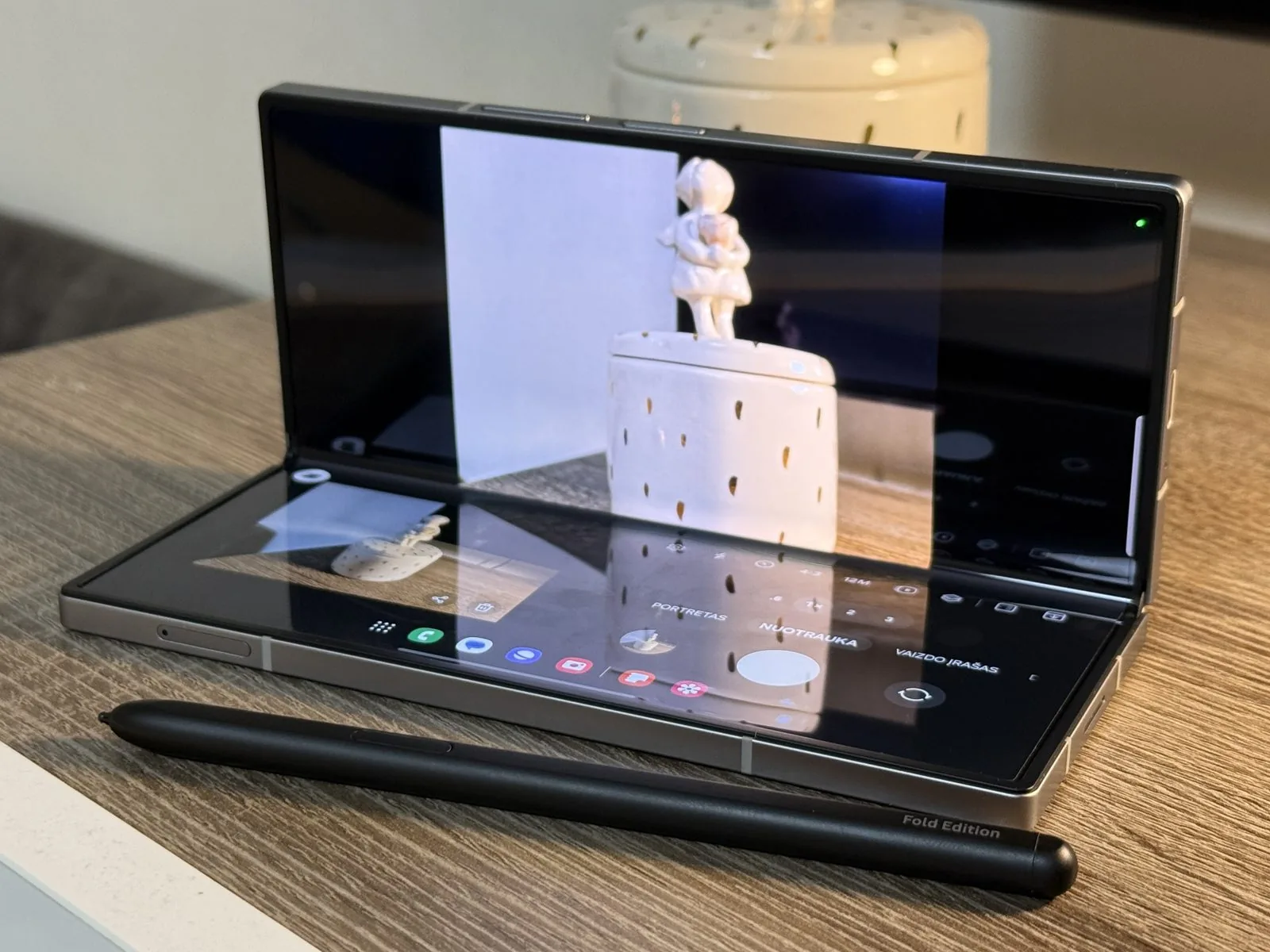 Video capabilities are unchanged — you can film up to 8K at 30 frames per second. There's more noise in darker conditions, but quality stays very good.
The selfie cameras are unchanged too. The 10 MP camera under the cover display takes good photos. The 4 MP camera under the folding display still delivers that nostalgic quality — I noticed no improvement at all over last year’s model.
Galaxy AI
Galaxy AI, launched at the start of this year, is gradually finding a place in my daily routine. Admittedly only a few features strike me as useful and get used practically every day. The Galaxy Fold6 arrived with some additional AI features, and those are what I’ll focus on.
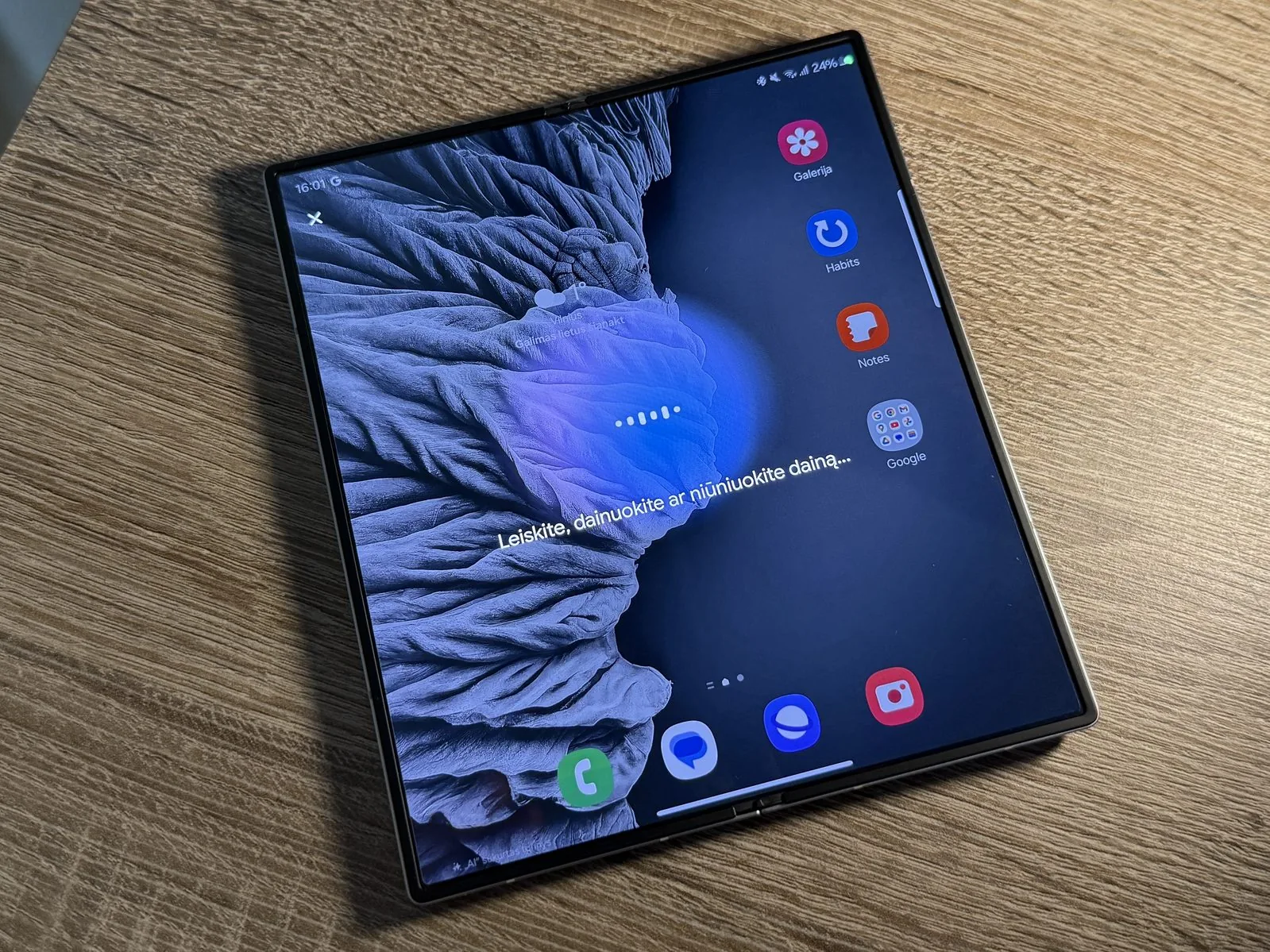 The updated Circle to Search makes it easier not only to look up objects or words but, with the new Music Search, to find a favourite song. Meanwhile the integrated Translate can translate both text seen through the phone's camera and text shown on screen. The feature works much like Google Assistant and Google Translate.
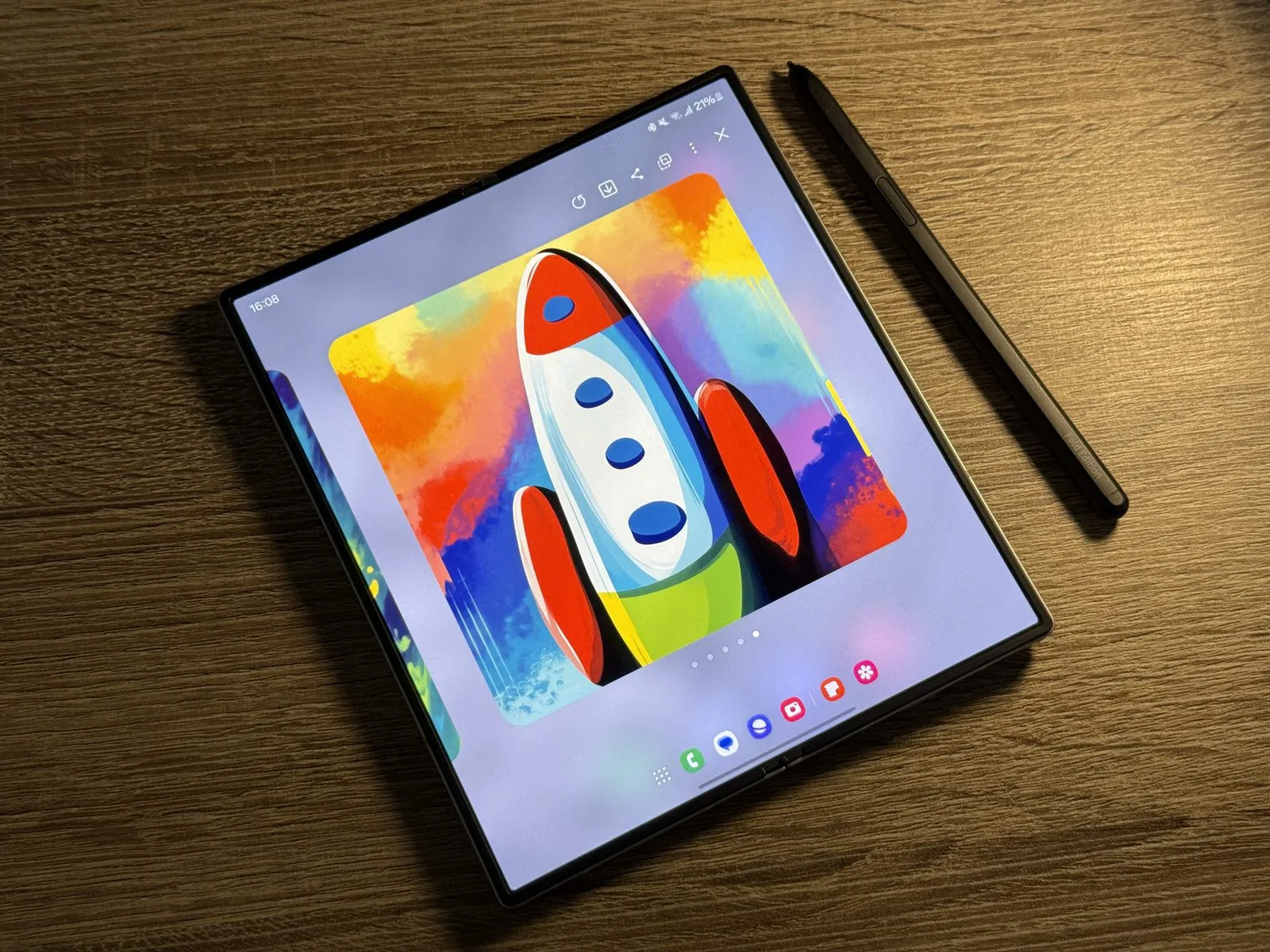 The new AI features Smart Select and Sketch to Image expand what you can create. Smart Select lets you conveniently outline text or a photo on screen and then modify it: text can be translated, shortened, copied and shared, while photos can be augmented with drawings that AI can turn into real objects, stickers or other creations.
Sketch to Image, reachable via an S Pen gesture, can turn your simple sketch into a piece of art. Admittedly the AI doesn’t recognise some things, or they conflict with ethical standards — you can’t draw a moustache on someone’s face, for example. The feature is available in the Notes and Gallery apps.
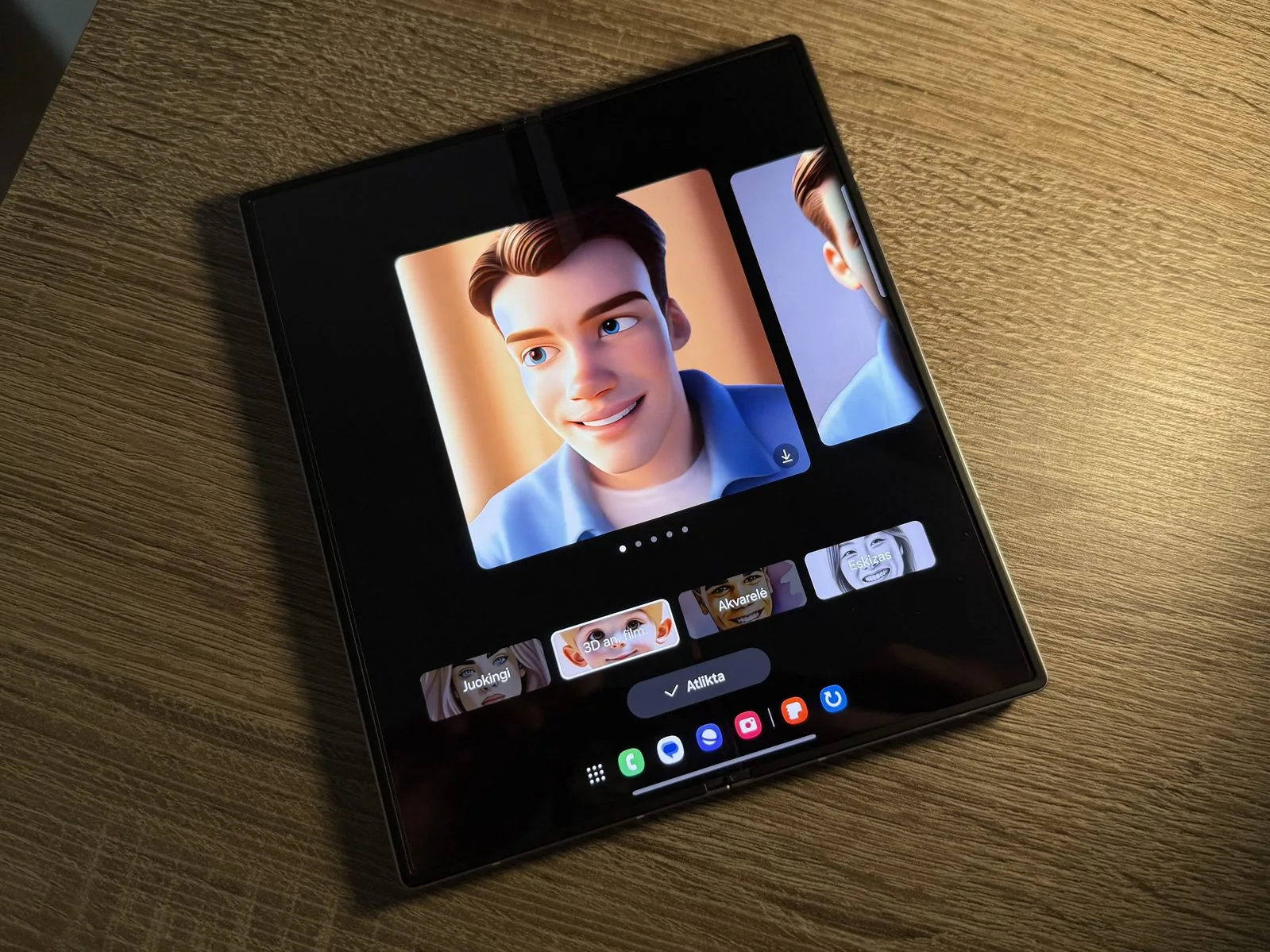 Photo editing has gained new features too. Alongside the existing ones such as straightening, moving and removing objects, there's now Portrait Studio, which turns any portrait into a comic, animation, watercolour or sketch-style image. Sometimes you have to take quite a few shots before you get a realistic avatar. The Gallery also has a new Live Effect feature, which turns photos into short clips with a depth effect, bringing more life to the highlighted subjects.
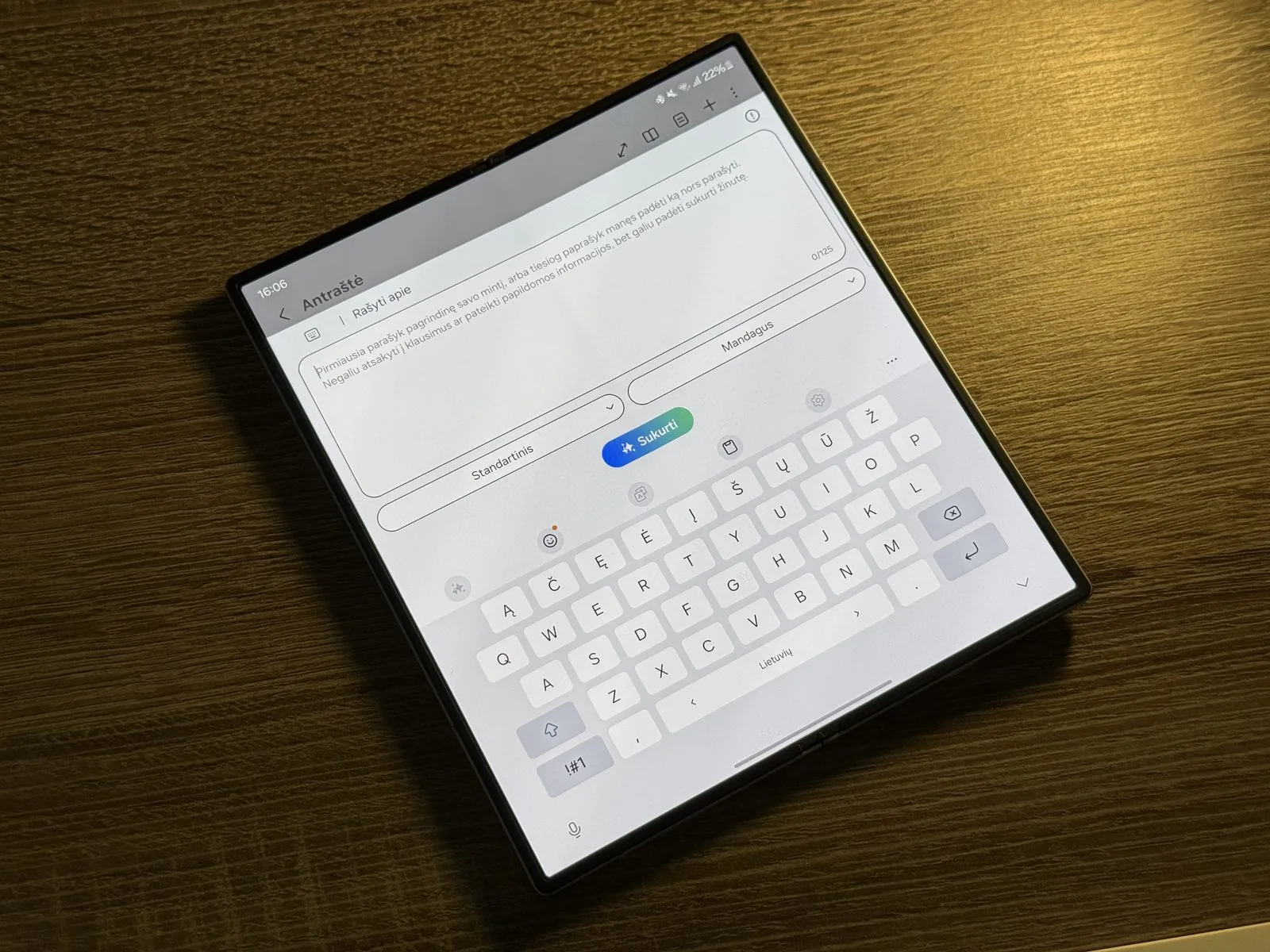 Among the writing assistance features such as text correction and style editing, there's a new one called Composer. It can build text from a few words, which you could use for Instagram posts, for example. The artificiality shows through, though, so I wouldn't recommend using it too often.
Performance and battery
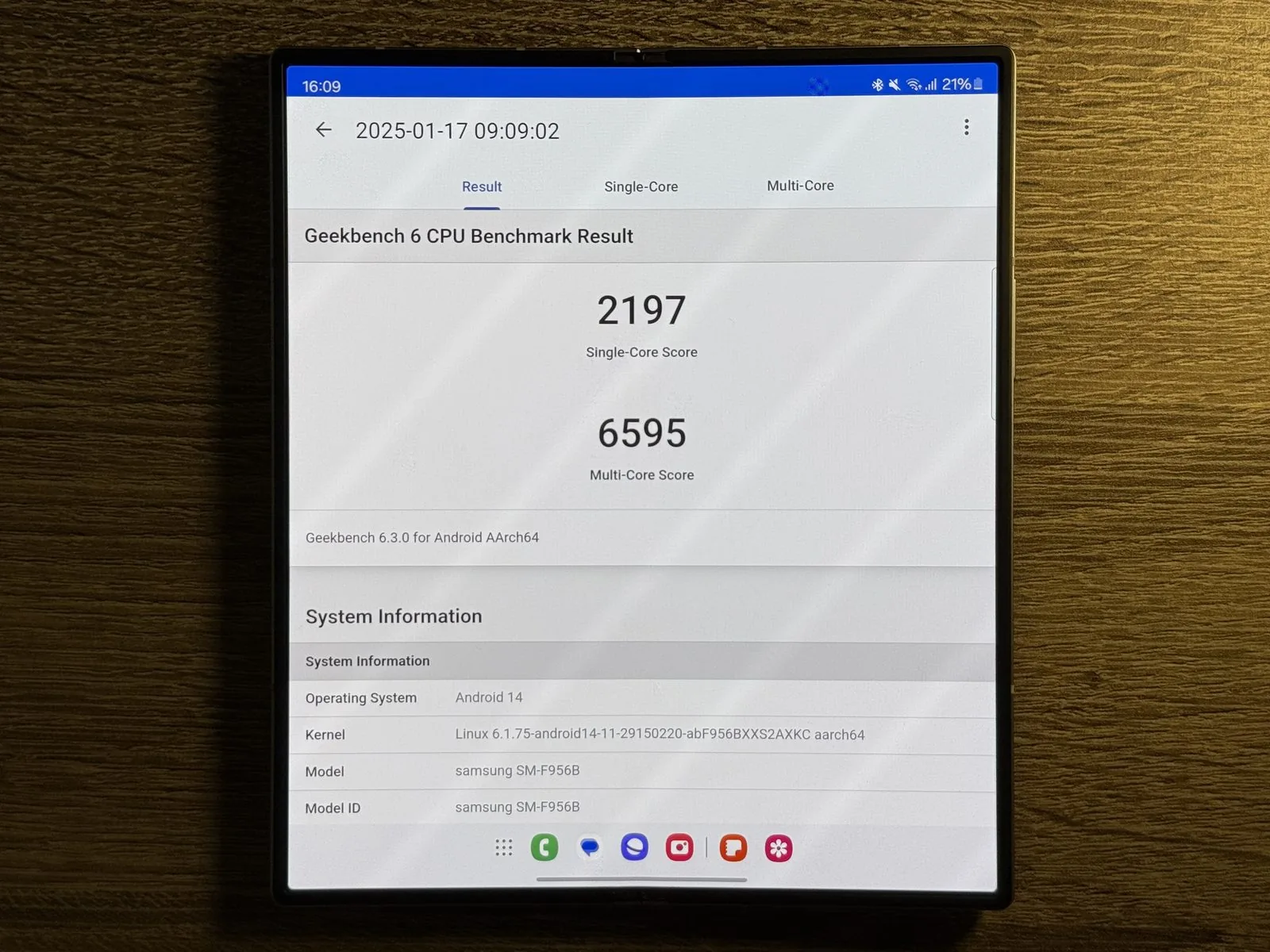 The Galaxy Fold6 has an excellent processor — the Qualcomm Snapdragon 8 Gen 3 for Galaxy, which is 17% more powerful than the Snapdragon 8 Gen 2. I won't dwell on this, because it's 2025 and more and more models are arriving with Snapdragon 8 Elite chips offering even greater gains in performance and efficiency. The Fold6 is well optimised for gaming — no stutter, everything runs smoothly. The new vapour chamber is 1.6 times larger than the Fold5's, so the device dissipates heat more effectively. Under heavy use the back does warm up slightly, but it doesn't cause much discomfort. Since the chip is widely optimised for, game developers build titles that make the most of the processor's capabilities.
The Fold6 holds a 4,400 mAh battery, unchanged in size, though Samsung promises up to two hours more runtime thanks to the more efficient processor. I didn’t notice a significant difference — under normal use the phone lasts up to two days, with 6–7 hours of screen time. The biggest problem is slow charging: the Fold6 supports up to 25 W wired and up to 15 W wireless. I’d like charging speed to reach at least 45 W.
One UI and support
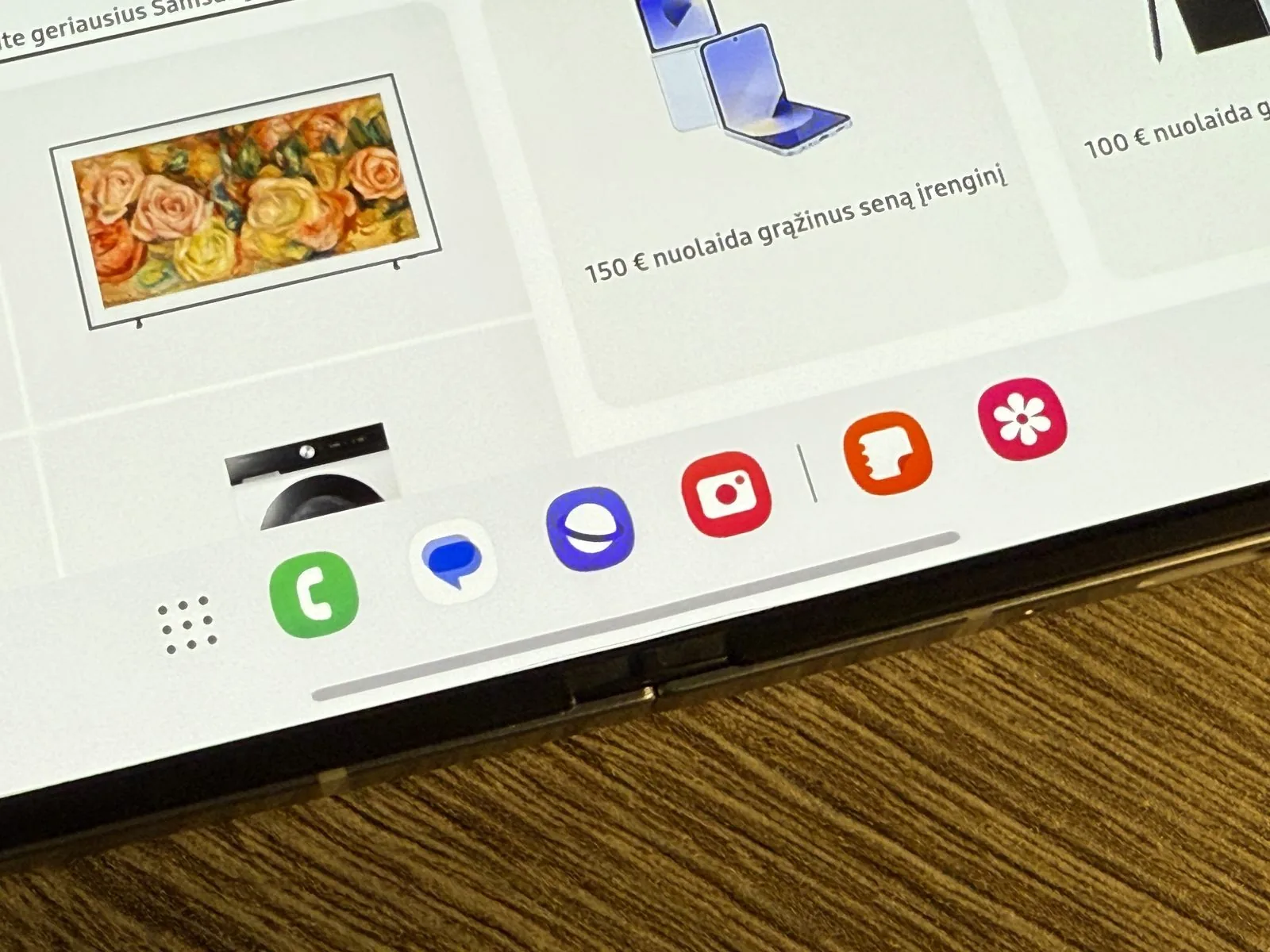 The Galaxy Fold6 runs Android 14 with the One UI 6.1.1 interface. Android 15 with One UI 7, which brings noticeable design changes, will reach the Fold6 in February. Overall the software is superbly adapted to the folding display: you can use three apps at once, and the taskbar at the bottom makes launching them much easier. More and more third-party apps, such as Instagram and TikTok, are being optimised for the larger screen. Some adaptation attempts do look odd, though — MS Teams, for instance, makes the Fold6 harder to use.
We shouldn’t forget the S Pen, which I tried for the first time with the Fold6. The experience differs slightly from the S24 Ultra — because the display is softer and creased, you need to press more carefully to avoid damaging the surface. Once you get used to it, though, the stylus becomes very convenient: you can sign documents, jot down key thoughts, or edit photos and video. The one difference is that the S Pen Fold Edition doesn’t support Bluetooth, so features such as remote shutter or gestures aren’t available on this device.
The Fold6 falls under Samsung’s updated support policy — the phone will be fully supported for seven years, with security updates for eight (different sources give different figures).
Verdict: pros and cons
| Pros | Cons |
|---|---|
|
|
The Galaxy Fold6 isn’t a phone for everyone. Its high price means the device suits only those who genuinely need a larger screen for work or entertainment. It isn’t Samsung’s best phone — if you don’t need a folding display and the camera matters most, I’d suggest waiting for the Galaxy S25 series.
That said, don’t undervalue the Fold6 — it’s the best folding phone on the market when it comes to software optimisation. You can find prettier and technically superior models, but I haven’t yet seen this level of productivity and system adaptation. As a sixth-generation foldable, the Fold6 is ready to handle whatever you throw at it.
Read next
Advertisement