
Galaxy S25 Ultra first impressions
First impressions | 2 weeks of use
Hello, I’m back with a Samsung release (well, slightly old news by now) — the Galaxy S25 Ultra. Launched a month ago, this phone brought plenty of changes to everyday artificial intelligence, along with some updates to the hardware and system. I’ve been using it for two weeks now, so I want to share my first impressions and introduce a new format — a “mini review” focused on covering the most important things quickly.
Design changes
The Galaxy S25 Ultra no longer stands out with its sharply angular design and now resembles the other S25 series devices more closely. The body is made from grade 5 titanium, the back from Gorilla Glass Victus 2, and the display from Gorilla Glass Armor 2, which reduces reflections further. That last one is a questionable change, though, because most people stick a screen protector on the moment they buy a new device, so the display becomes mirror-shiny all over again.
The camera module design has changed slightly too — the rings are carried over from the Fold6. That gives the design some coherence, but the rings sit a little proud of the back and dust collects between them. We've already seen online how these rings can be peeled off, though it takes considerable effort, so I can reassure you they won't fall off on their own.
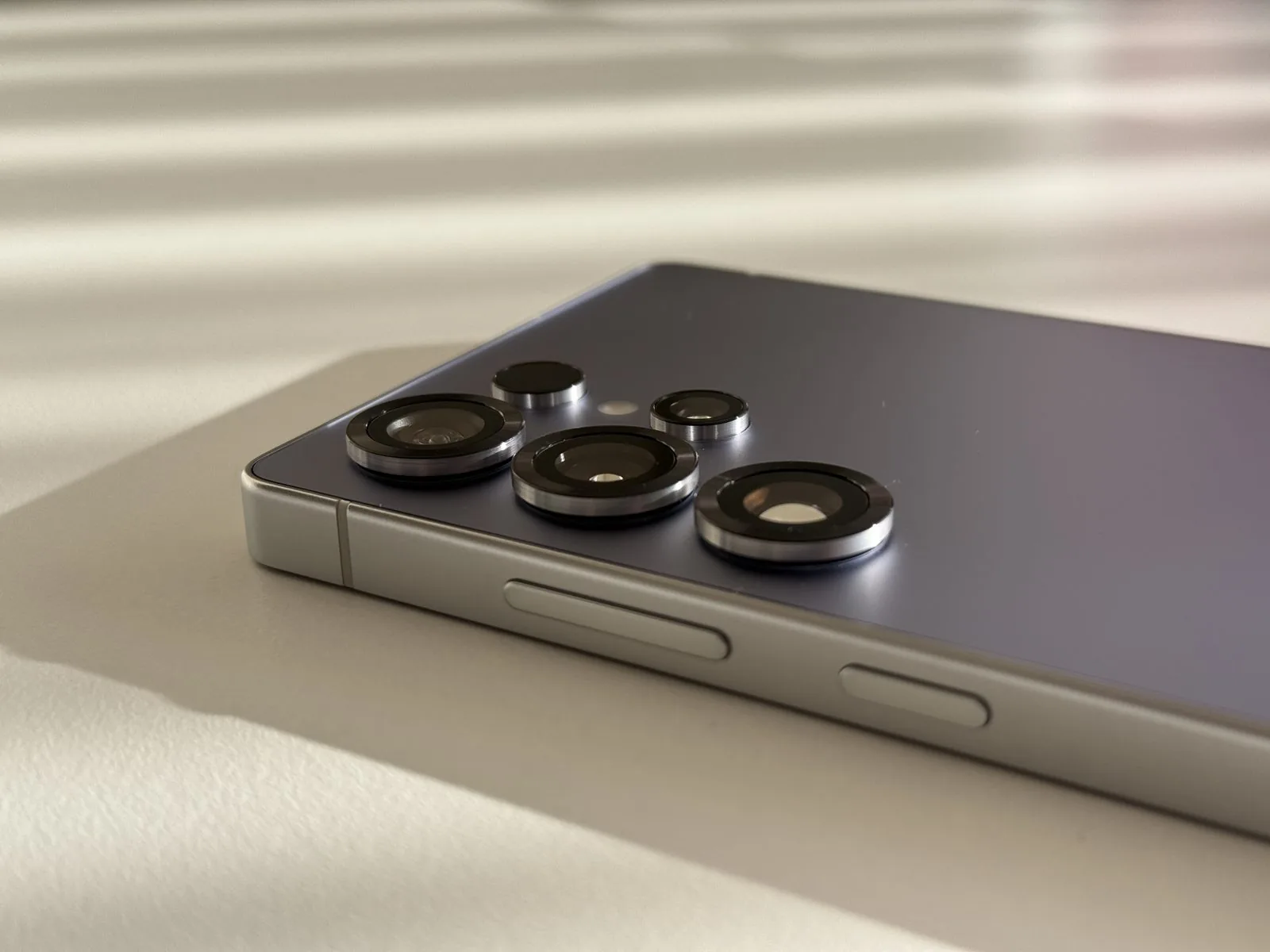 Galaxy S25 Ultra camera rings
The phone has lost 14 grams (now 218 g) and become 0.4 mm thinner (now 8.2 mm). The difference isn’t especially noticeable, though, because the flat body still gives a bulkier impression.
The Galaxy S25 Ultra has a 6.9-inch display, so it really isn't small and struggles to fit in a trouser pocket. But a bigger screen is an advantage, since it holds more content. Having used 6.3-inch devices for six months, I feel the difference. Is that a good thing? Longer use will tell.
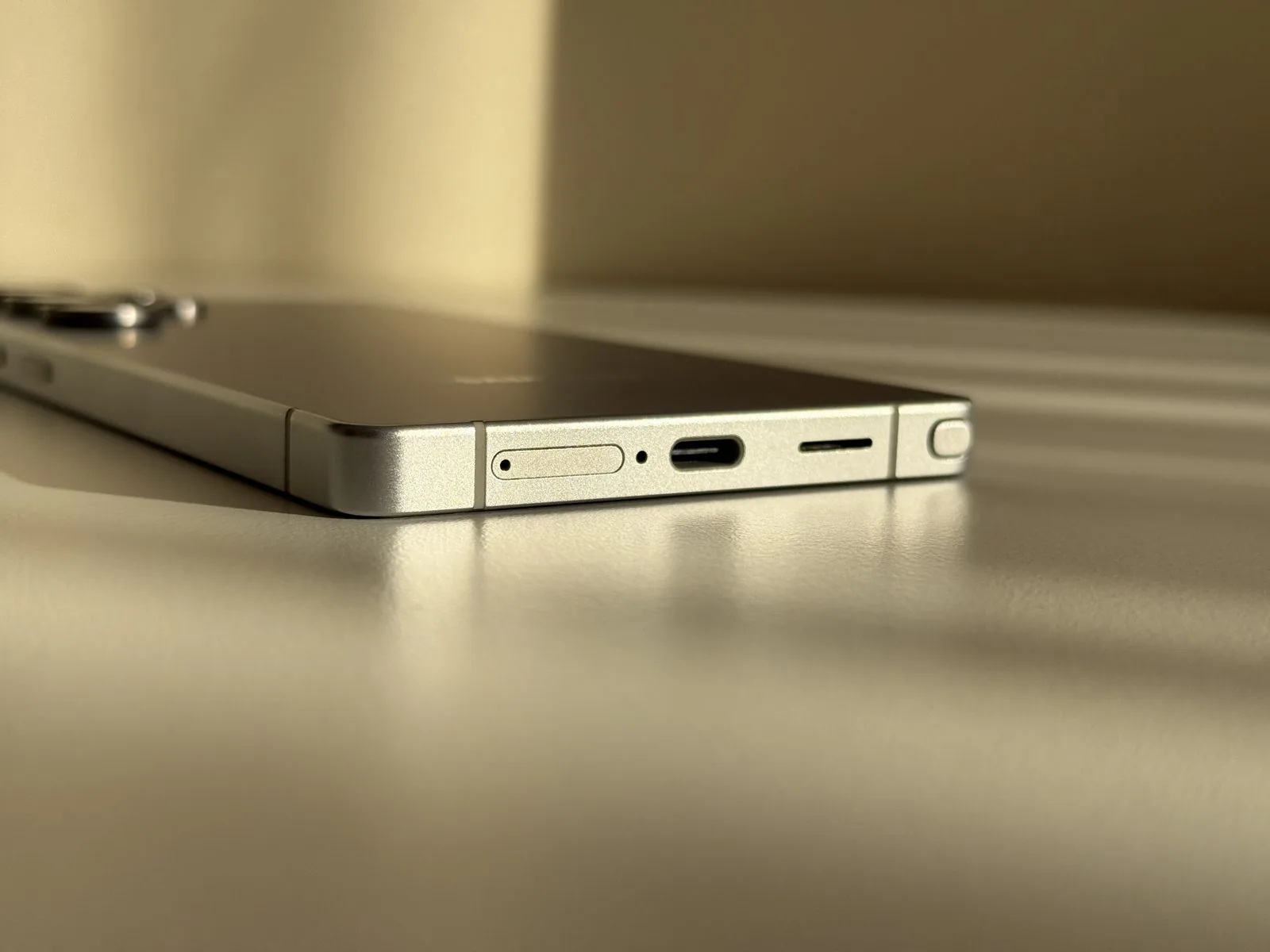 Galaxy S25 Ultra titanium frame
The back is a lovely titanium blue and the frame is silver. The design concept is borrowed from the Galaxy S24 FE series — every model has a silver frame regardless of colour: titanium black, titanium grey or titanium pink. Only the titanium jet black model stands out with a black frame. In Lithuania prices start at €1,459 for the 256 GB model and reach €1,829 for the 1 TB version.
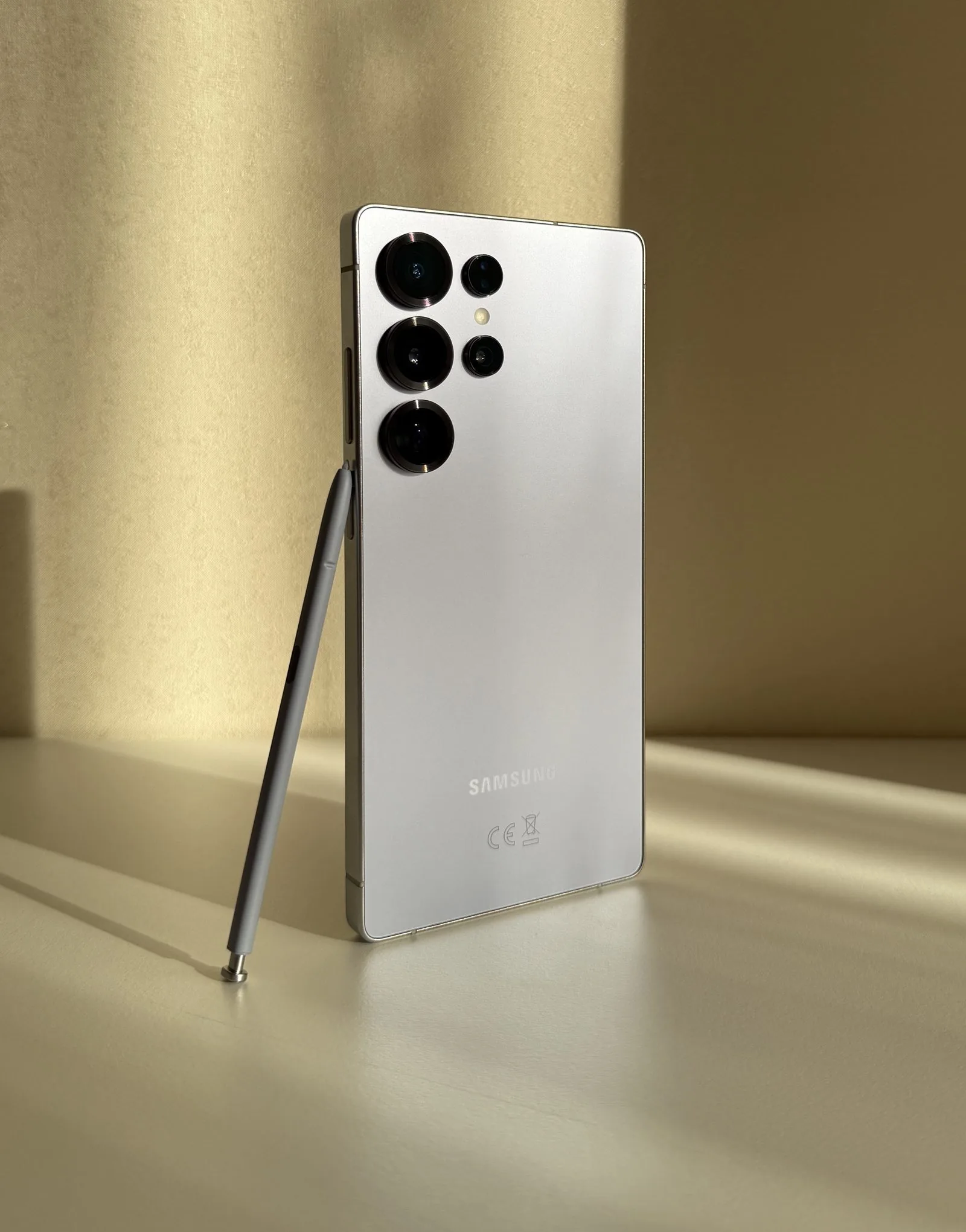 Galaxy S25 Ultra
Display
The display remains a 6.9-inch Dynamic AMOLED 2X, 120 Hz, HDR10+ with 2,600 nits peak brightness. There are no technological changes — it still uses last year’s M13 panel. Samsung has, however, fixed the graininess that used to show in the dark at minimum brightness.
The new addition on the software side is ProScaler, which improves displayed image quality up to QHD+ resolution. By default the phone runs at FHD+, so I've no doubt most Ultra users won't notice this change.
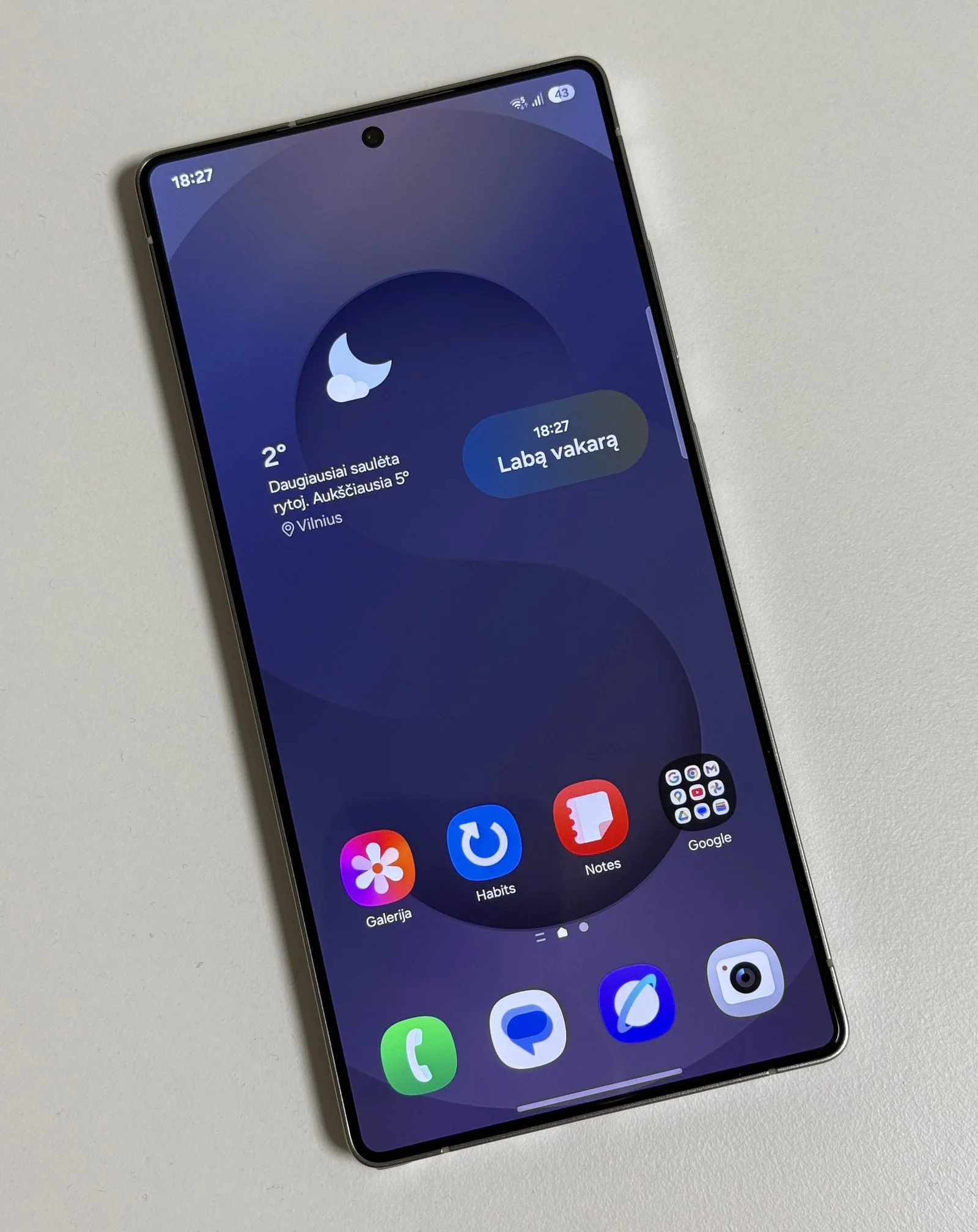 Galaxy S25 Ultra display
Advertisement
Performance and battery
The Snapdragon 8 Elite processor is 37% more powerful than the previous generation. The device also has a 40% larger vapour chamber, which improves cooling. Over two weeks of use I noticed no performance or heat problems — apart from the first few hours, while data was transferring from my old device.
The battery should last about an hour longer than the previous model, and the tests I've seen put this Samsung among the leaders for battery endurance.
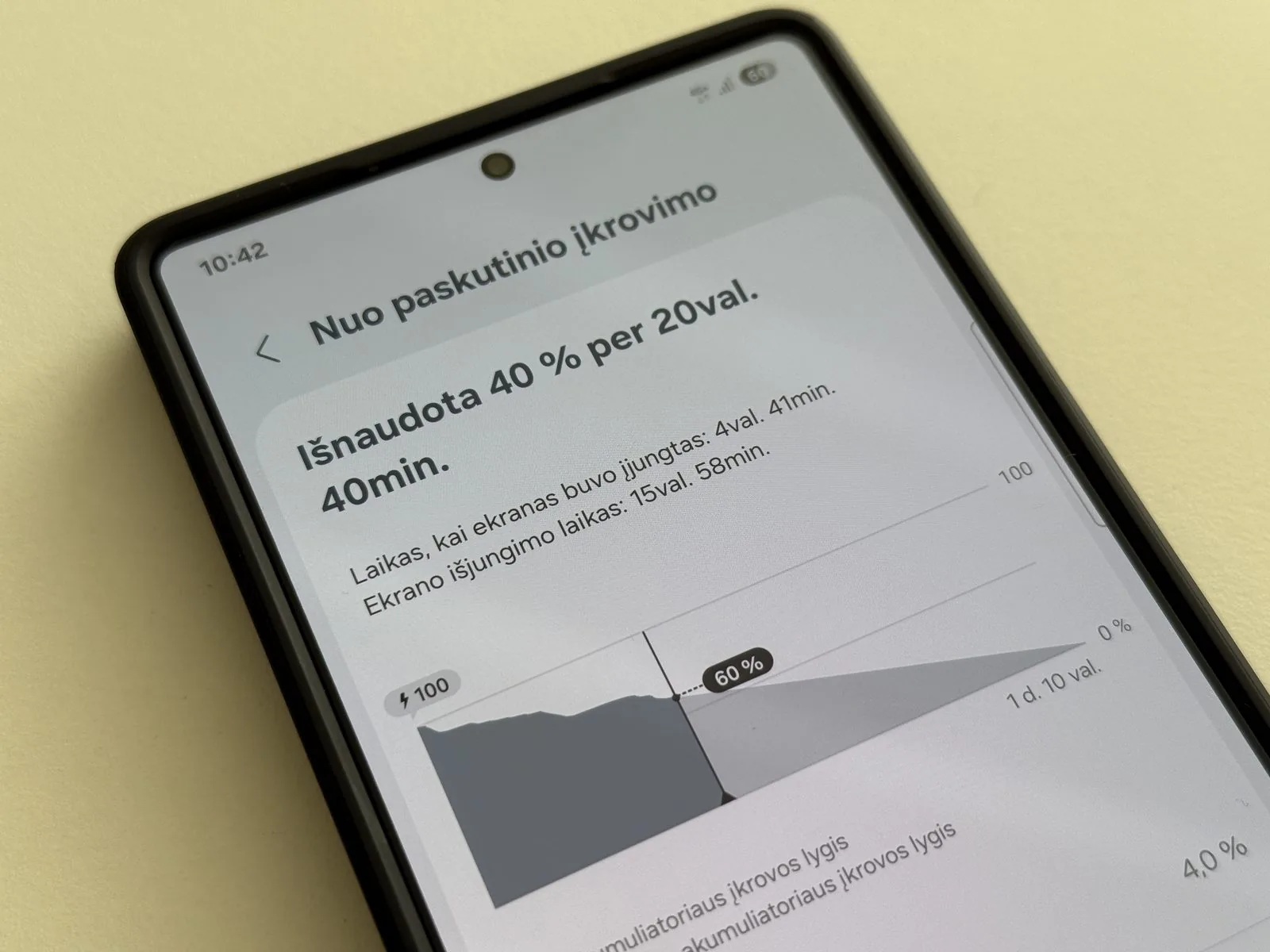 Galaxy S25 Ultra battery life
Camera
Only one camera has been updated — a new 50 MP ultra-wide that’s four times more detailed thanks to the higher megapixel count. The improvement is noticeable: switching over from the main 200 MP sensor, the drop in quality is far less obvious.
Even so, this camera has drawbacks in poorer lighting, where it sometimes casts a purple tint. A software update will likely resolve this.
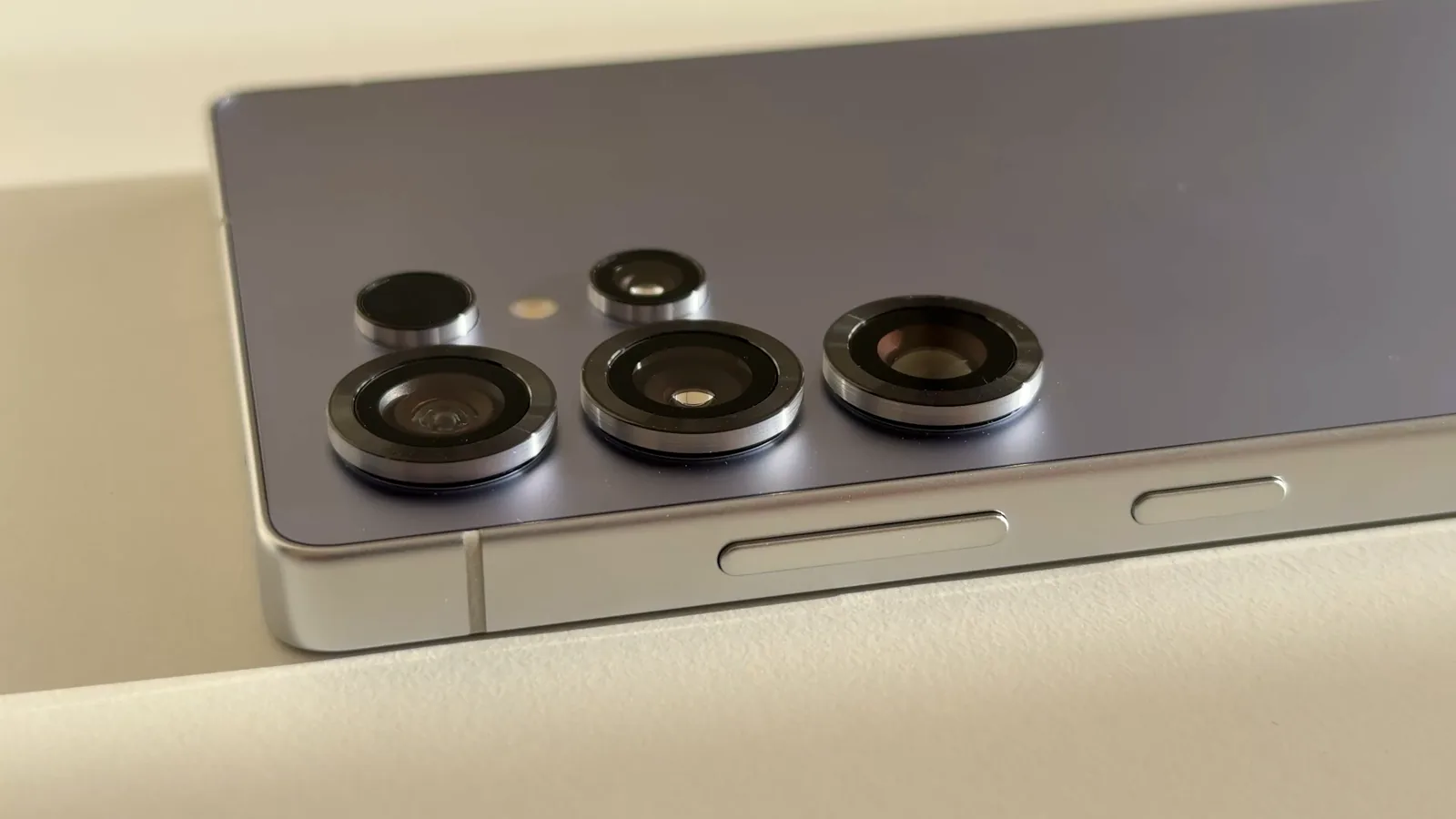 Galaxy S25 Ultra cameras
The other cameras are unchanged:
- 200 MP main sensor — still very good
- 10 MP telephoto with 3x optical zoom — showing its age
- 50 MP telephoto with 5x optical zoom — excellent
- 100x digital zoom — still poor quality, but slightly better than last year
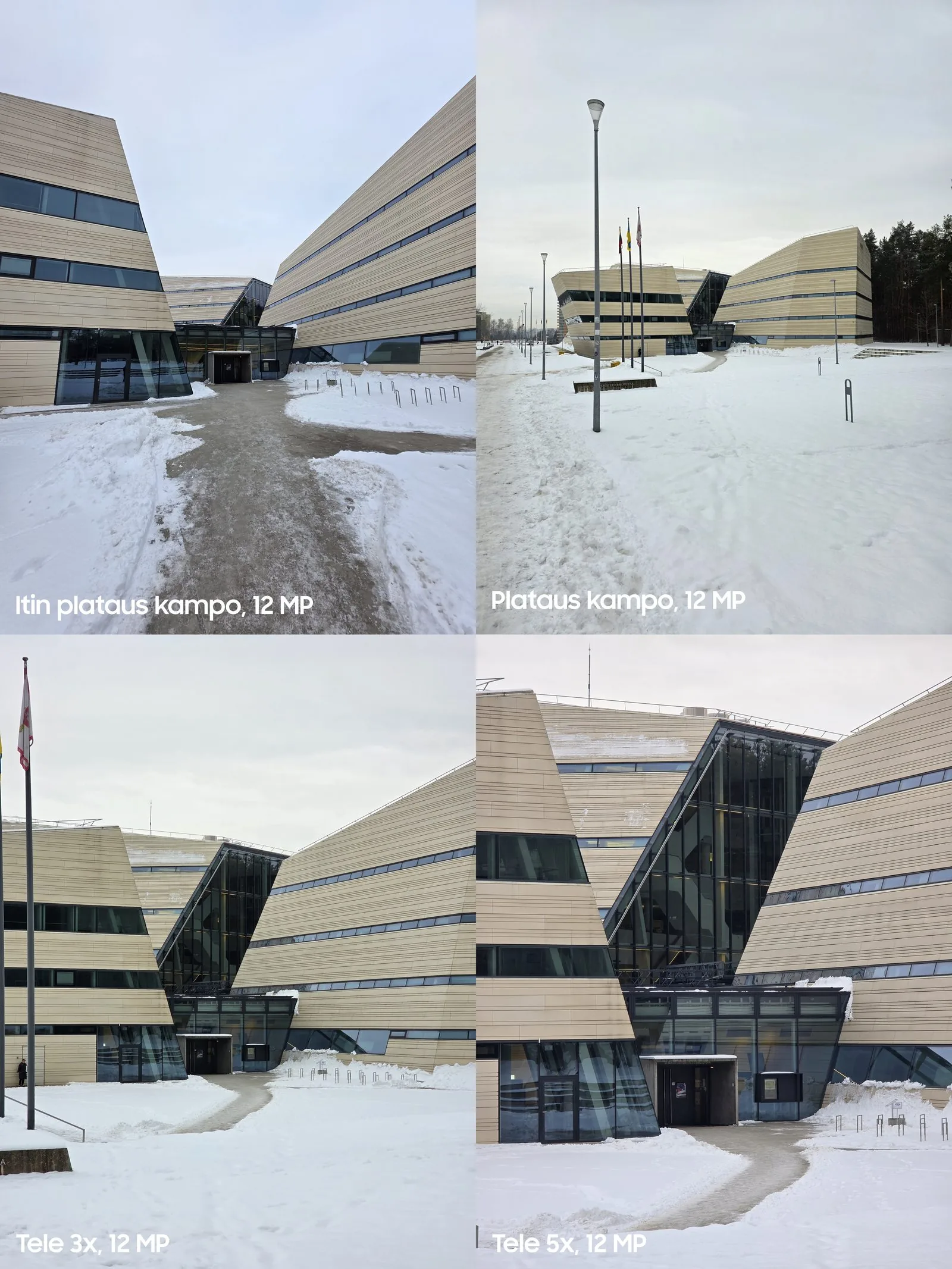 Shot on Galaxy S25 Ultra
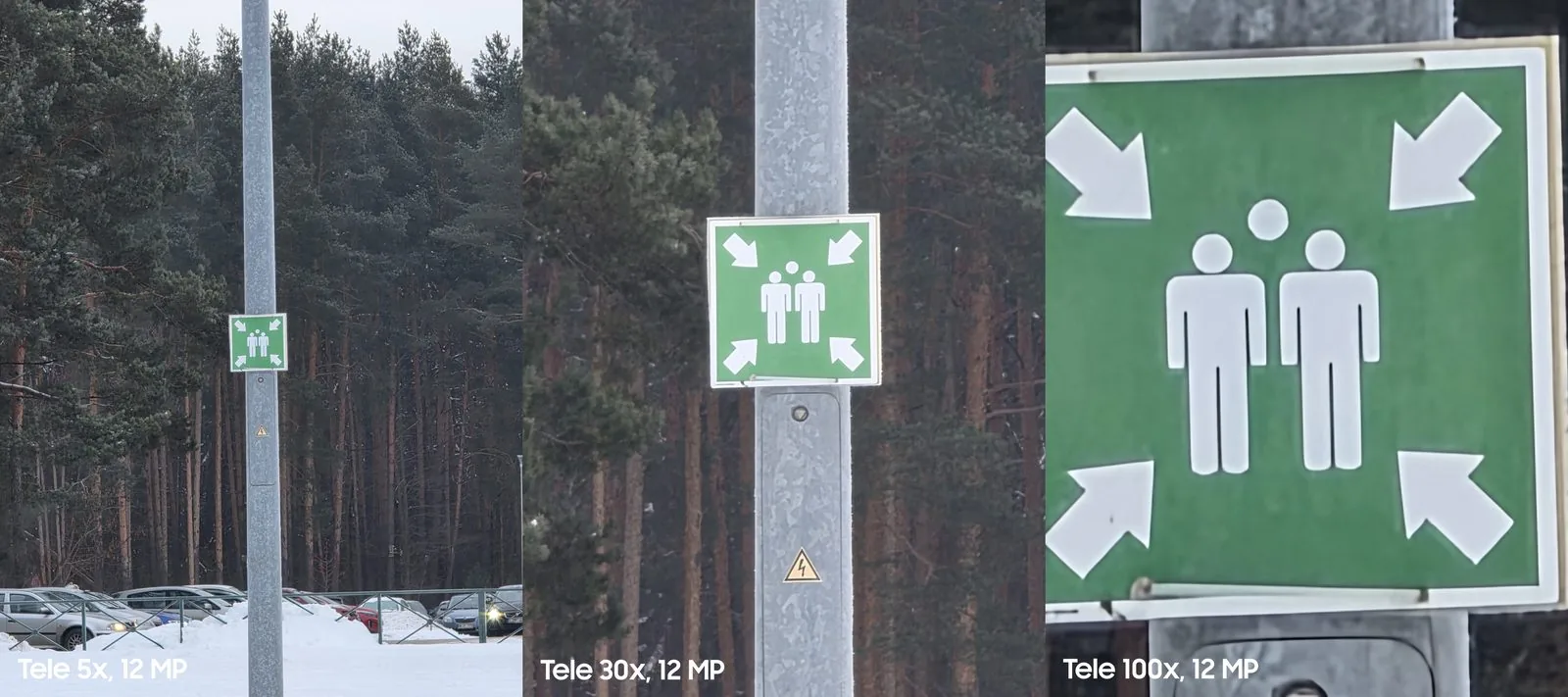 Shot on Galaxy S25 Ultra
Video quality has improved noticeably, though it still records more noise than an iPhone. A Log mode has been added, allowing more detail to be extracted, which professionals in particular will appreciate. The files are large, admittedly, but you can colour grade them right inside the Gallery app without needing professional editing tools.
Galaxy AI and One UI
The new Galaxy AI features are, more precisely, Google AI. The Gemini assistant now works better in Lithuanian and is activated by default by holding the power button. As we saw in the adverts, you can ask it to find the nearest restaurant or a match and add it straight to your calendar.
The photo editing tools have been updated too — more precise object removal, an audio eraser and AI effects.
Other One UI 7 updates:
- Now Bar and Now Brief — showing active tasks and a daily summary
- Quick panel changes — the controls feel more like iOS, but you can restore the previous layout
- Considerably smoother animations — especially noticeable in Recent Apps
I won't dwell on the One UI 7 changes here. I'll share my opinion and impressions in the full review.
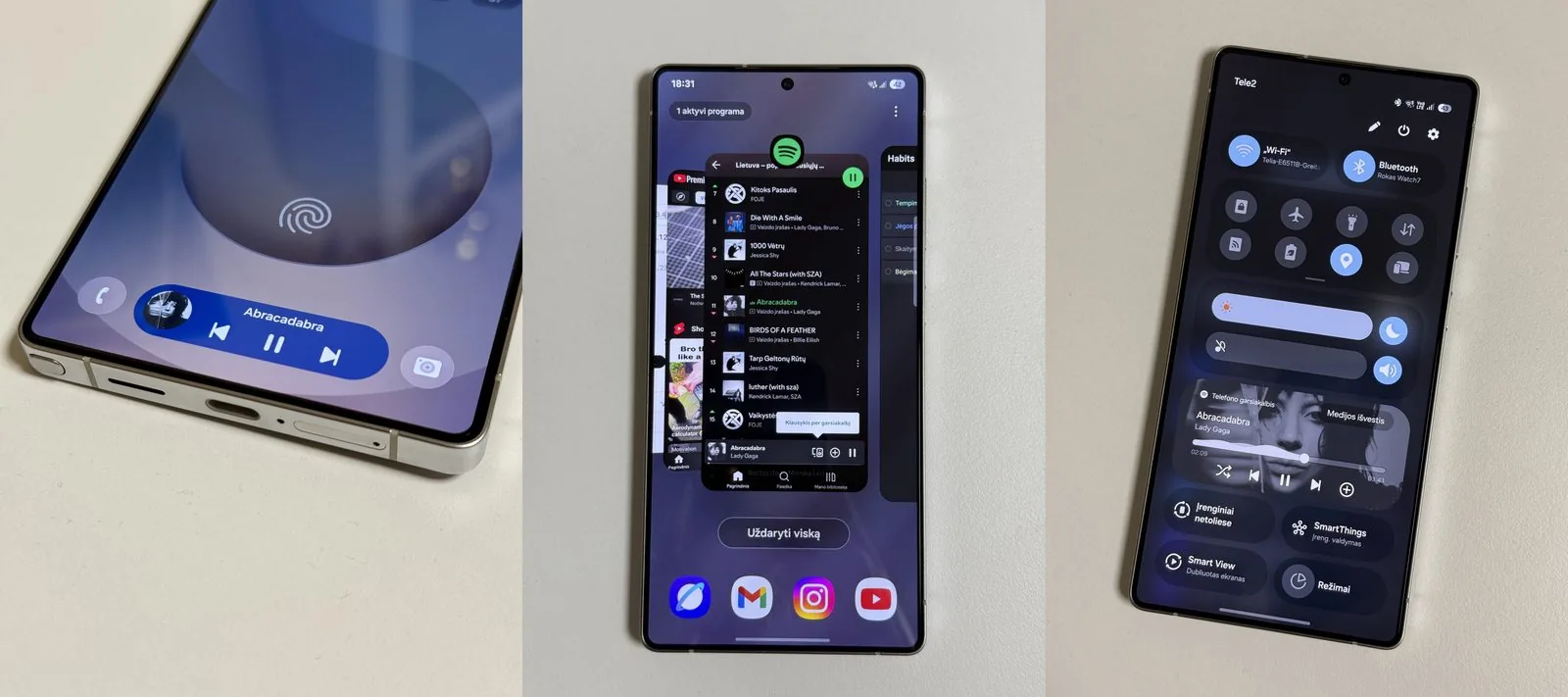 Left to right: Now Bar, Recent Apps, Quick panel
S Pen
This year the S Pen lost its Bluetooth connection. According to Samsung, only 4% of users used the feature. That’s debatable — it used to be convenient for taking photos remotely or using air gestures. The stylus now feels cheaper, and slotting it into the body produces a faint rattle.
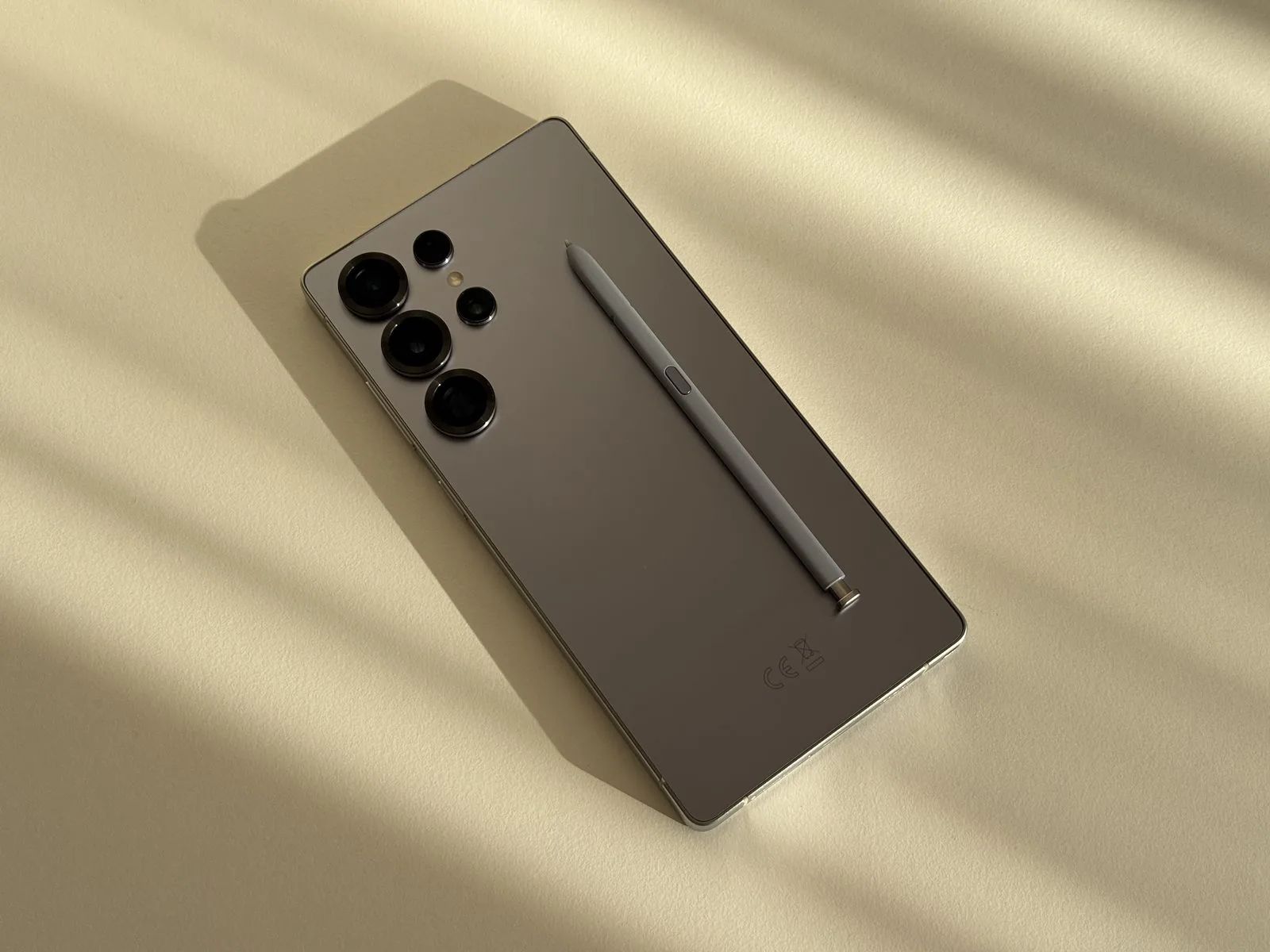 Galaxy S25 Ultra with the S Pen
Verdict
The Galaxy S25 Ultra hasn’t brought revolutionary changes — the biggest updates are in the software and the AI features. If you have an older Samsung phone, or you want to try the Ultra series, it’s still an excellent choice. But Samsung ought to be feeling more pressure from competitors and delivering more innovation, because for now it looks like they’ve simply been resting on their laurels.
You can buy the Galaxy S25 Ultra through this link. Buying through this link helps support my work.
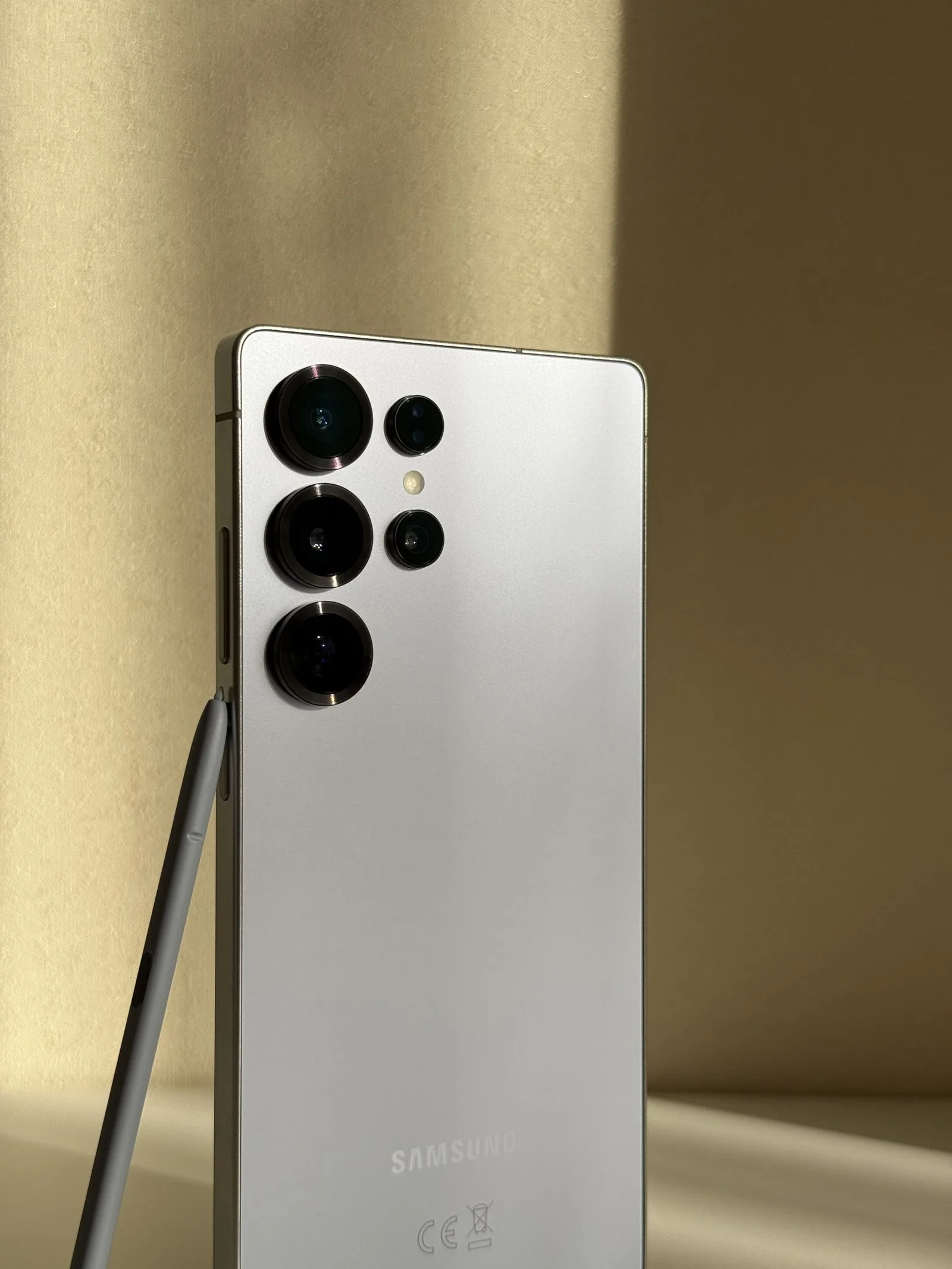 Galaxy S25 Ultra
Read next
 9 March 2026
I tried Galaxy S26 and Buds4
Privacy innovations, monster performance, and a reborn design
 9 June 2025
Galaxy A36 and A56 review
Are they really worth calling awesome?
 23 December 2024
Samsung Galaxy S24 FE review
Galaxy AI finally reaches the fans | 1 month of use
Advertisement